Portable Generator Connections for Hurricane Season
Hurricane season brings an increased risk of power outages throughout Northwest Florida. Strong storms, heavy rain, and high winds can interrupt utility service for hours or even days. As a result, many homeowners begin preparing backup power options before severe weather arrives. DeGraaf Electrical Service, LLC provides portable generator connections in Pace, FL, helping homeowners install safe and reliable generator connection systems for temporary backup power during outages.
Why Portable Generator Connections Matter During Hurricane Season
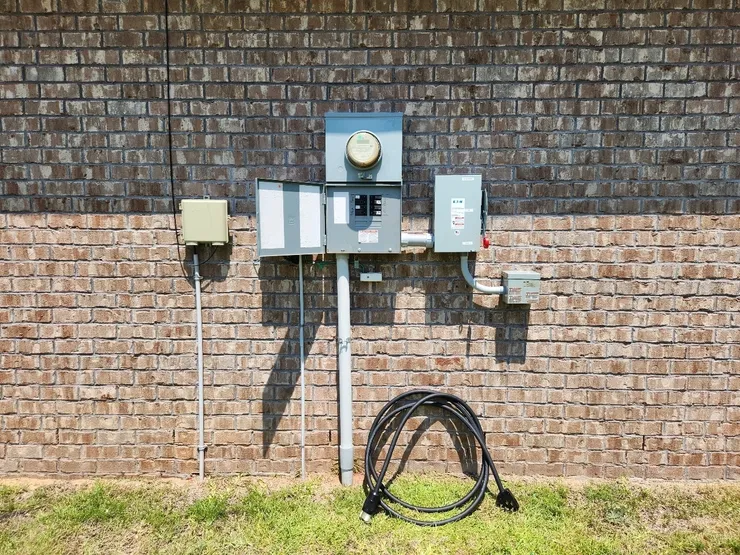
Portable generators should never be connected directly to a home’s electrical system without proper equipment and installation. Unsafe connections can create serious hazards, including backfeeding electricity into utility lines, damaging electrical equipment, or creating fire and shock risks. Properly installed generator interlocks and manual transfer switches help isolate the home from utility power and allow selected circuits to operate safely from generator power during an outage.
Generator Interlocks & Manual Transfer Switches
A generator interlock is installed at the electrical panel and helps prevent the generator breaker and the main utility breaker from operating at the same time. Manual transfer switches provide a separate switching method that allows selected circuits to safely transfer between utility power and generator power. The best option depends on the layout of the electrical system, the type of generator being used, and the circuits the homeowner wants to operate during an outage.
Planning Safe Backup Power for Your Home
Many homeowners use portable generators to help power refrigerators, freezers, lighting, internet equipment, medical devices, sump pumps, or limited air conditioning systems during temporary outages. However, every generator has operating limits. Proper planning helps determine which circuits can safely operate within the generator’s available capacity.
Each installation starts with a review of the home’s electrical system, panel configuration, and generator connection location. We evaluate the system layout and recommend a solution that supports safe operation and reliable performance during emergency situations. In some cases, additional electrical updates may also be recommended depending on the condition and capacity of the existing system.
DeGraaf Electrical Service, LLC installs generator interlocks and manual transfer switches for portable generators. We do not maintain or repair generators. Our team operates as a licensed and insured electrical contractor under Florida Electrical Contractor License #EC13010255 and completes all work in compliance with applicable electrical codes and safety standards.
Based in Pace, FL, we serve homeowners throughout Pace, Milton, Pensacola, Gulf Breeze, Navarre, Cantonment, and surrounding Northwest Florida areas.
If you are preparing for hurricane season or want to install a portable generator connection for backup power, contact DeGraaf Electrical Service, LLC to schedule a free estimate.
FAQ
Can a portable generator power my entire home?
Some portable generators can power a larger portion of the home than others, but generator capacity varies significantly depending on the model and electrical demand. Most portable generators are used to operate selected circuits and essential equipment during temporary outages. Proper planning helps determine which circuits can safely operate within the generator’s available capacity.
What is the difference between a generator interlock and a manual transfer switch?
A generator interlock is installed at the electrical panel and helps prevent generator power and utility power from being connected at the same time. A manual transfer switch allows selected circuits to switch between utility power and generator power through a separate switching mechanism. The best option depends on the electrical system layout and backup power needs.
Can a portable generator be connected directly to a home outlet?
No. Portable generators should not be connected directly to household outlets or electrical systems without proper transfer equipment and installation. Improper connections can create serious safety hazards, including backfeeding utility lines and damaging electrical equipment.