When people think about the skilled trades, it’s easy to picture the physical side of the work: tool belts, ladders, trenches, attics, service vans and people building or repairing things with their hands.
All of that is certainly part of it. National Tradesmen Day was a few days ago, and we wanted to take the opportunity to talk about another part of skilled labor that isn’t always as visible: the knowledge behind the work.
The word skilled matters.
For electricians, plumbers, HVAC technicians, mechanics, carpenters, welders and other tradespeople, learning the job takes years. And even after someone becomes proficient in their trade, the learning doesn’t really stop.
Becoming an Electrician Takes Years
Electricians don’t simply learn how to install receptacles, switches and lights and then head out on their own.
An electrical apprenticeship combines classroom education with years of on-the-job training. Apprentices learn electrical theory, wiring methods, calculations, safety practices and how to navigate the National Electrical Code. At the same time, they’re working alongside more experienced electricians and learning how those concepts apply in the real world.
And there is quite a lot of real world to learn.
Reading about a circuit in a textbook is one thing. Opening a box in a 50-year-old house that has been repaired, remodeled and altered several times over its lifetime can be something else entirely.
Knowing how an electrical system is supposed to work provides the foundation. Experience teaches you to recognize all the different ways someone may have actually put it together.
The Code Book Is There for a Reason
The National Electrical Code is not exactly light reading.
It contains hundreds of pages addressing electrical installations ranging from ordinary residential wiring to specialized equipment and systems. Electricians have to understand not only individual requirements but also when those requirements apply, how different sections of the Code interact and how changes from one Code cycle affect the work being performed.
They don’t memorize every sentence of the NEC—and they don’t need to. An important part of becoming knowledgeable in the trade is learning how to navigate it, where to look for information and how to correctly apply what you find to the situation in front of you.
Electrical codes also change over time. Products change. Technology changes. The electrical demands we place on our homes change.
The learning doesn’t end when an apprenticeship does.
Troubleshooting Requires a Different Kind of Knowledge
Some electrical work has an obvious beginning and end. A customer needs a new circuit for an appliance, an EV charger installed or a panel replaced.
Troubleshooting is different.
A customer may simply tell us, “This outlet stopped working,” or “My breaker keeps tripping.” That tells the electrician what the symptom is. It doesn’t necessarily tell them where the problem is.
The failed receptacle may be exactly where the problem is—or the actual problem may be another connection somewhere upstream on the circuit. A breaker may be defective, or it may be doing exactly what it is supposed to do because an appliance, damaged conductor, loose connection or overloaded circuit is causing it to trip.
Sometimes one loose neutral connection can cause problems that appear throughout a home.
Finding those problems requires testing and an understanding of how the circuit works, but experience matters too. Every problem an electrician encounters adds to the mental library of things they’ve seen before.
That’s one of the less visible parts of skilled work. Sometimes a repair only takes a short amount of time because the person making it has spent years learning how to figure out what needs to be repaired.
The Work Is Physical, Too
Of course, none of that makes the physical part disappear.
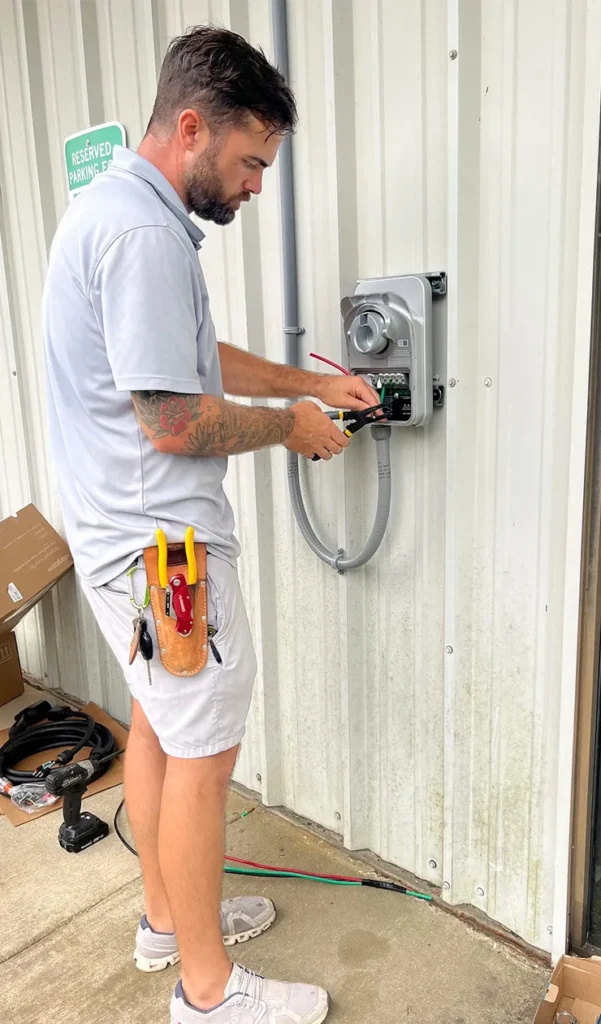
Electrical work can mean spending hours in an attic during a Northwest Florida summer, digging trenches for underground electrical work, working from ladders, crawling into tight spaces, pulling heavy conductors or carrying equipment back and forth from the service van.
Some days our guys are troubleshooting a receptacle in an air-conditioned home. Other days they’re replacing electrical service equipment outside in the heat. The next job might put them in an attic trying to trace a damaged wire that doesn’t particularly want to be found.
Being knowledgeable about the work doesn’t make those parts any less demanding.
Good Tradespeople Also Learn From Each Other
One of the valuable things about working in a trade is that not everything you learn comes from a textbook.
An apprentice can learn from a journeyman who has already encountered a particular problem. Someone comes across an unusual installation and brings it up with the rest of the crew. One electrician knows a trick for tracing a difficult circuit that another hasn’t used before.
Tradespeople also regularly work alongside other trades.
As electricians, we interact with HVAC technicians, plumbers, pool and hot tub companies, general contractors and plenty of others. Knowing where one trade’s responsibility ends and another begins—and being able to communicate with the people doing that work—is part of getting a project completed correctly.
No one reaches a point where they’ve seen absolutely everything.
Skilled Labor Is More Than the Time Spent on the Job
Customers understandably see the portion of the work that happens at their home or business.
What they don’t necessarily see are the years that came before it: classroom hours, apprenticeship training, thousands of hours in the field, Code books, mistakes corrected under the supervision of someone more experienced, unfamiliar problems worked through and years of seeing how electrical systems behave in the real world.
That accumulated knowledge is part of the service a skilled tradesperson provides.
The same is true across the trades. When a good HVAC technician diagnoses a problem quickly, a mechanic recognizes a sound, or an experienced carpenter knows how to approach something unusual in an older building, they’re drawing on years of knowledge that aren’t necessarily visible in the finished job.
Recognizing the People Behind the Trades
National Tradesmen Day gives us an opportunity to recognize the people who have chosen to build that knowledge and put it to work every day.
We’re especially appreciative of our own crew at DeGraaf Electrical Service and the time they’ve invested in learning their trade. We also appreciate the many other tradespeople and local companies we work alongside throughout Pace, Milton, Pensacola and the surrounding Northwest Florida communities.
There’s a lot more behind skilled work than what you see when the service van pulls into the driveway.
And this seems like a good time to recognize it.
Leave a Reply